Species Profile
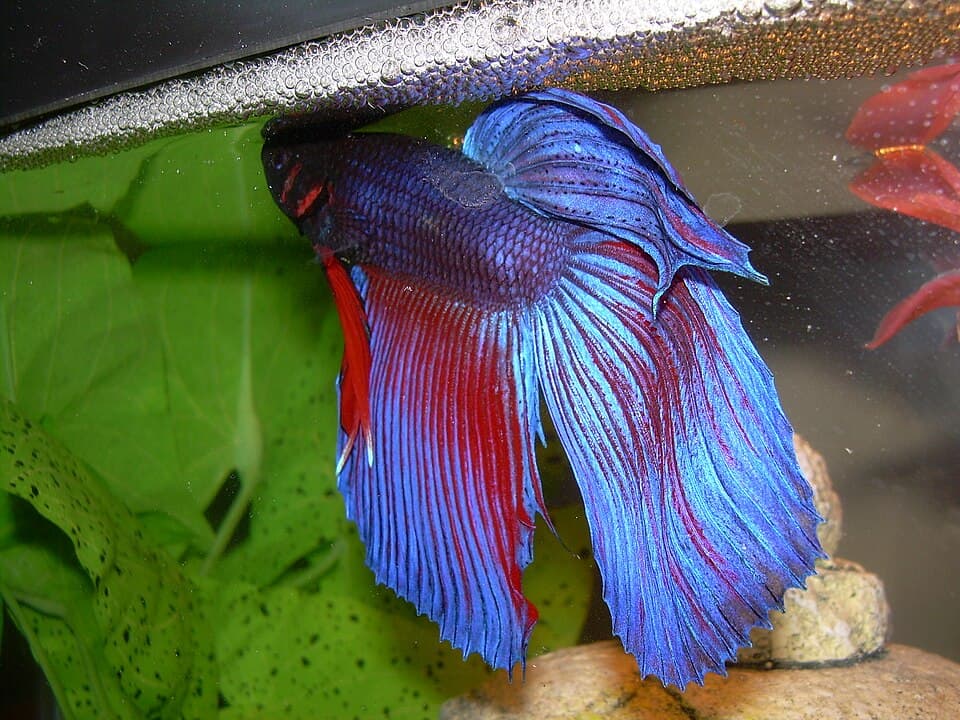
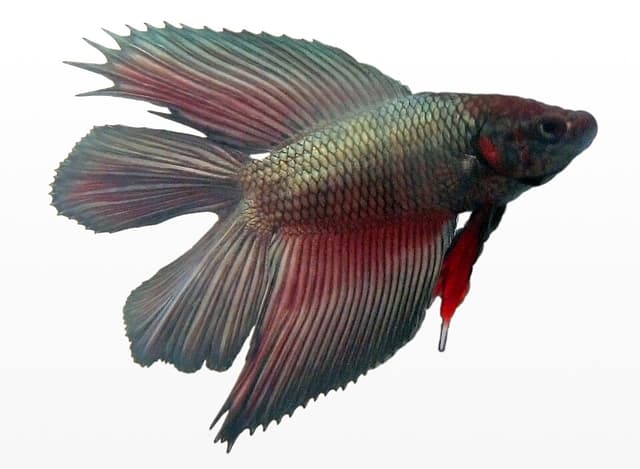
Male Betta
Betta splendens
Anabantoidssemi-aggressiveLong-finned
Adult size
2.5″
Minimum tank
5 gal
Temperature
76–82°F
pH
6.5–7.5
Schooling
Solitary OK
Water level
top
Diet
Betta pellets, frozen, live
Notes
Never with other male bettas or fin-nippers. Long fins are easy targets.
Tank Setup
Bettas tolerate small tanks but thrive in 5gal+ with stable temperature and gentle filtration. They breathe air at the surface (labyrinth organ), so a tight lid with a small air gap is essential — bettas jump. Aquascape with silk or live plants (avoid sharp plastic), driftwood for hiding, and dim lighting. A sponge filter or a low-flow HOB keeps current minimal — bettas struggle in strong currents because of their fins. Almond leaves (Indian almond / catappa) tannin the water gently, mimicking their Southeast Asian habitat.
Behavior
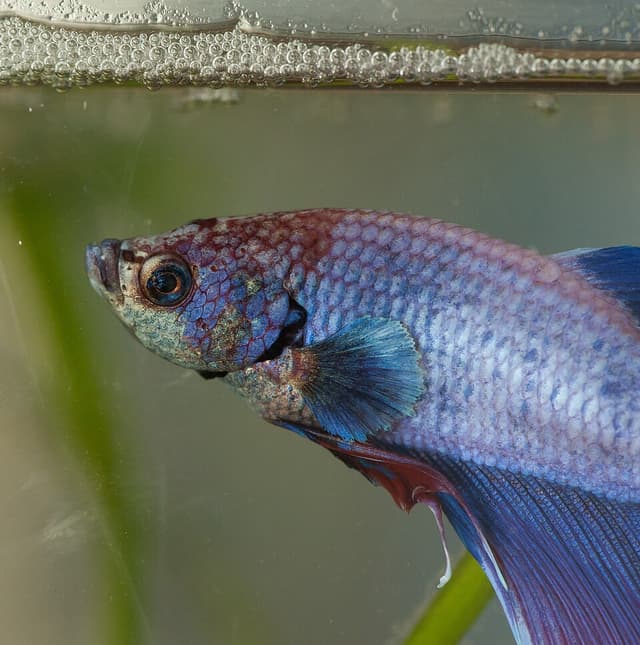
Solitary, surface-oriented, territorial. Builds bubble nests at the water surface when content. Recognises its keeper and learns feeding routines quickly. Flares gills + fins at perceived rivals — own reflection, neighbouring tanks, anything resembling another male betta. Hunts at the surface; dives to grab sinking food when motivated. Most active in the first few hours after lights-on.
Breeding
Spawning is induction-style: condition a male and an unrelated female on live foods (brine, daphnia, blackworms) for 1–2 weeks, then introduce her to his tank with a divider. Once she displays vertical stripes and he builds a bubble nest, remove the divider. They embrace head-down at the surface, eggs drop, male catches them in his mouth and places each into the nest. Remove female immediately after spawning — he'll kill her if he can. Fry hatch in 24–48 hours; male tends nest for ~2 days then is removed. Feed fry infusoria, then microworms, then baby brine.
Health
Most common issues: fin rot (water quality crashes — do 25% weekly changes, dose Indian almond leaves), velvet (yellow-gold dust on body — treat with copper or Methylene Blue), ich (white spots — raise temp to 86°F for 10 days), swim bladder (overfeeding — fast 2 days then peas). Bettas are sensitive to chlorine and chloramine; ALWAYS use a water conditioner.
Frequently Asked
Can I keep two male bettas together?
No. They will fight until one is dead. The name 'Siamese fighting fish' is literal — they were bred for this. A divider lets you keep two males in the same tank visually but physically separated, but most keepers find this stressful for the fish.
Can a male betta live with shrimp?
Sometimes. Amano shrimp (2″+) are usually safe because they're too big to swallow. Cherry shrimp and smaller breeds get picked off. The betta's personality matters — a placid betta tolerates shrimp; a feisty one doesn't. Watch the first 24 hours carefully and have a backup plan.
Do bettas need a heater?
Yes, unless your home stays consistently 76–82°F. Bettas are tropical fish and decline rapidly below 74°F. A small 25–50W heater handles a 5–10gal betta tank.
Why does my betta flare at its own reflection?
It sees the reflection as another male and prepares to fight. Brief flaring is fine (good exercise), but if your betta flares constantly it's stressed. Reduce reflection with backgrounds on multiple sides, slightly dimmer lighting, or covering the tank glass exterior at one end.
Photo: ErgoSum88 / Wikimedia Commons · Source · Public domain